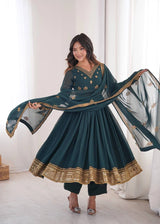
15 Types of Trending Embroidery Designs for Saree Blouses
Walk into any ethnic wear market in India, and the word 'embroidery' gets used for everything from a single running stitch on a cotton kurta to gold zardozi covering an entire bridal lehenga. The price difference between the two garments can range from ₹500 to ₹50,000. The reason for that gap is almost entirely explained by the types of embroidery used on blouses, what they are, how long they take to produce, and the skill involved.
If you've ever wondered why one embroidered blouse costs ten times as much as another or why a shopkeeper can't easily explain the difference, this guide solves it. These are 15 blouse embroidery types you'll actually encounter when shopping for Indian ethnic wear, explained clearly and without jargon.
Why Does Understanding Embroidery Types Matter?
India employs over 2.5 million workers across approximately 24,000 embroidery manufacturing facilities worldwide, and a significant share of that production is concentrated in Indian craft clusters across Gujarat, Uttar Pradesh, Rajasthan, and West Bengal.
India's handicraft sector, which includes embroidered and crocheted goods, generated USD 114.70 million in export value in just the first quarter of FY 2025–26. The country operates 744 handicraft clusters employing over 212,000 artisans, with GI-tagged embroidery products commanding up to 20% higher prices in international markets.
What this means practically: the hand embroidery styles on a blouse you buy are not just decoration. They represent a craft lineage, a regional tradition, and a measurable economic contribution. Knowing what you're buying lets you understand its value and its price.
Here's a calculation worth considering: if a blouse with quality Aari embroidery retails at ₹3,500 and you wear it across 14 occasions in two years, the cost per wear is ₹250. A ₹900 blouse with weak machine embroidery that frays after 6 wears costs ₹150 per wear, but you've also lost the blouse. Understanding ethnic embroidery techniques helps you evaluate which piece is actually the better investment.
Top 15 Best Types of Trending Embroidery Designs for Saree Blouses

The perfect blouse can completely transform a saree, turning a classic drape into a spectacular fashion statement with these 15 trending embroidery designs leading the season.
1. Aari Embroidery
What Is It?
Aari embroidery uses a hooked needle, the Aari needle, drawn across the front of the fabric to create continuous chain stitches. The technique allows beads, sequins, metallic threads, and stones to be incorporated in the same motion as the stitch, making it one of the most efficient methods for producing heavily detailed work. Common Aari motifs include floral vine patterns, paisleys, and Mughal-influenced jaal (lattice) designs.
Where Does It Show Up on Blouses?
Bridal lehenga blouses, gown-style back blouses, net overlays, and increasingly on structured everyday saree blouses where one section, neckline, cuff, or yoke, carries the Aari work while the rest stays minimal.
2. Zardozi Embroidery
What It Is
Zardozi is one of the most recognisable forms of royal Indian craft. It uses gold and silver metallic threads, along with wire, pearls, beads, and sequins, stitched onto silk, velvet, or satin to create raised, three-dimensional designs. Originally patronised by Mughal court artisans in cities like Lucknow, Agra, and Delhi, Zardozi remains the defining ethnic embroidery technique for bridal and formal occasion blouses.
Where It Shows Up on Blouses
Bridal blouses, heavy reception pieces, and formal saree blouses worn to weddings as a guest. The work is dense and heavy; Zardozi blouses often add noticeable weight to the garment.
3. Kantha Embroidery
What It Is
Kantha is a running stitch embroidery tradition from West Bengal and Bangladesh, originally developed by rural women who stitched through multiple layers of old sarees and dhotis to create quilts and repurpose worn fabric. The stitch is simple, a straight running stitch placed in dense, layered rows, but the density and pattern create rich visual textures.
Where It Shows Up on Blouses
Cotton saree blouses for daytime events, kurta blouses for casual ethnic wear, and contemporary fusion pieces. Kantha blouses are washable and wear well with repeated use.
4. Phulkari
What It Is
Phulkari, literally 'flower work' in Punjabi, is embroidered from the reverse side of the fabric using silk threads (Pat silk) on handspun cotton. Stitching from the back creates clean, vibrant patterns on the front without knots showing. The related Bagh technique uses Phulkari stitching to cover the entire fabric surface; no base fabric is visible at all.
Where It Shows Up on Blouses
Salwar suit blouses, dupatta-coordinated sets, festive pieces for Baisakhi and Lohri celebrations. The colour palette is typically vivid: gold thread on red or orange cotton is the most classic combination.
5. Kashmiri Embroidery (Kashida)
What It Is
Kashida is the collective name for the embroidery traditions of Jammu and Kashmir. The most refined form is Sozni, a needlework technique using fine chain or stem stitches to create dense floral and chinar leaf motifs on woollen shawls and silk fabrics. Sozni is considered among the most time-intensive hand embroidery styles in India; a single shawl can take months to complete.
Where It Shows Up on Blouses
Shawl-style or cape blouses, winter occasion blouses, and Indo-Western fusion pieces. Kashmiri embroidery is rare on everyday blouses due to the cost of production, but striking when used on statement pieces.
6. Resham (Silk Thread) Embroidery
What It Is
Resham embroidery uses fine silk threads to build colourful, detailed surface patterns. It's one of the most versatile entries in the embroidery types list because it works across almost every base fabric, cotton, silk, georgette, crepe, and suits designs ranging from simple border work to complex all-over coverage. Resham thread has a natural sheen that photographs well in any light.
Where It Shows Up on Blouses
Everyday saree blouses, festival wear, lehenga blouses for semi-formal occasions, and kurta sets. If you're building a capsule of blouses that cover multiple occasions, a Resham piece is the most reliable workhorse in the group.
7. Gota Patti
What It Is
Gota Patti is a Rajasthani appliqué and embroidery tradition dating to the 3rd century. Thin strips of gold or silver zari ribbon, the gota, are cut into leaf, flower, petal, and geometric shapes and then stitched or bonded onto fabric. The result is a garment that shimmers uniformly in the way a woven metallic thread cannot, because the gota strips cover larger areas than individual thread work.
Where It Shows Up on Blouses
Bridal blouses, Rajasthani-inspired festive pieces, Navratri and Karva Chauth occasion wear. Gota Patti is one of the most recognisable bridal embroidery choices across North and West India.
8. Mirror Work (Shisha Embroidery)
What It Is
Shisha embroidery, from the Persian word for glass, involves sewing small circular mirrors onto fabric using a decorative stitch that holds each mirror in a framework of thread. The Kutch and Rabari communities of Gujarat developed the most celebrated forms of Shisha work. Traditional Shisha uses actual mirrors; contemporary pieces often use reflective synthetic discs.
Where It Shows Up on Blouses
Festival blouses for Navratri and Diwali, Kutch-inspired ethnic sets, boho-style occasion blouses. Mirror work catches light dramatically and adds an energetic visual quality that suits festive contexts well.
9. Chikankari
What It Is
Chikankari is Lucknow's signature white-on-white embroidery, historically done on fine muslin using over 30 distinct stitches, including shadow work (where stitching on the back shows through the front fabric), phanda (tiny filled knots), and murri (small rice-shaped stitches). Modern Chikankari includes coloured thread variants and sequin-enhanced Mukaish work, but the traditional form remains white on white or white on pastel.
Where It Shows Up on Blouses
Summer blouses on cotton and chiffon, light festival occasion pieces, formal daywear blouses. Chikankari is among the most wearable of all blouse embroidery types because the technique is light and the garments can typically be hand-washed.
10. Suzani Embroidery
What It Is
Suzani is a Central Asian bridal craft tradition; the name derives from the Persian word for needle. Brides and their families traditionally embroidered Suzani panels as part of the dowry. The motifs are bold and symbolic: large sun discs, pomegranates, flowers, and geometric stars in vivid reds, blues, and oranges, stitched using chain and satin stitch on cotton or silk base fabric.
Where It Shows Up on Blouses
Statement blouses in contemporary fusion ethnic wear, art-forward fashion pieces, and Indo-Central Asian aesthetic collections. Suzani blouses make an immediate visual impression and pair particularly well with plain silk or cotton sarees.
11. Smocking
What It Is
Smocking gathers fabric into uniform pleats using a grid of stitches, then embroiders decorative patterns across the pleated surface to hold the gathers in place. Unlike most embroidery, smocking is simultaneously structural and decorative; it creates shape and texture from the fabric itself, not from applied thread work.
Where It Shows Up on Blouses
Puff-sleeve blouses where smocking holds the gathered sleeve, structured front-yoke blouses, and contemporary ethnic tops. Smocking adds a three-dimensional, textured quality that photographs with strong visual interest.
12. Crewel Embroidery
What It Is
Crewel embroidery uses wool threads (crewel wool) on a linen or cotton base to create raised, textured designs. The wool threads are thicker than silk or cotton embroidery threads, which means crewel work has a distinctly tactile, velvety quality. In Indian fashion, crewel appears most often in Kashmiri woollen textiles and is now being adapted for structured statement blouses.
Where It Shows Up on Blouses
Winter wedding blouses, jacket-style ethnic tops, occasion blouses in the cooler months. Not appropriate for summer wear due to the weight of wool thread.
13. Cross-Stitch
What It Is
Cross-stitch creates X-shaped stitches on even-weave fabric, building geometric patterns and pixelated images from a counted grid. It's one of the oldest and most widely practised embroidery forms globally, and in Indian ethnic fashion it appears most frequently in Rajasthani and Gujarati folk-inspired collections, particularly in red-and-white or indigo-and-white colour combinations.
Where It Shows Up on Blouses
Casual cotton blouses, everyday folk-style ethnic pieces, customised blouses where names or dates are embroidered in counted stitches.
14. Zari Work
What It Is
Zari refers to the metallic thread itself, historically made from real gold or silver wire, now most often from metallic polyester, woven or embroidered into fabric. Zari is the thread that gives Banarasi and Kanjivaram sarees their characteristic shimmer, and the same material appears on hand embroidery styles for blouses, particularly for bridal and festive occasions.
Where It Shows Up on Blouses
Silk saree blouses, bridal wear, grand festive occasion blouses. A well-made Zari blouse is designed to pair with specific heavy sarees and typically isn't versatile across a wardrobe; it's a statement piece rather than a workhorse.
15. Hardanger Embroidery
What It Is
Hardanger is a Norwegian drawn-thread technique that creates geometric, lace-like patterns by withdrawing fabric threads in a calculated grid, then filling the open spaces with decorative satin stitches and wrapped bars. In Indian fashion, Hardanger remains a niche choice, appearing in contemporary fusion and experimental designer pieces. It creates the visual impression of cutwork or lace without using separate lace fabric.
Where It Shows Up on Blouses
Indo-Western fusion blouses, couture experimental pieces, contemporary art-fashion collections. Not commonly found in traditional ethnic wear markets.
How to Choose the Right Embroidery for the Occasion?
Match Weight to Event
The heaviest embroidery, Zardozi, Aari with full coverage, and Gota Patti, is for events where you're dressing specifically for the occasion: weddings, receptions, large festivals. The lightest techniques, Chikankari, Kantha, and basic Resham, are for events where you want to look considered without overdressing.
Match Technique to Fabric
Not every ethnic embroidery technique works on every fabric:
- Silk: Resham, Zari, Zardozi, Aari, the smooth surface lets thread work sit cleanly.
- Cotton: Kantha, Phulkari, Cross-stitch, Chikankari, the texture supports running and surface stitches well.
- Georgette / chiffon: Light Resham, Chikankari, mirror work, avoid heavy techniques that will pull the fabric.
- Net / organza: Aari and light Zardozi, the open weave needs a reinforcing technique rather than a surface-filling one.
The Investment Test
I'd always ask one question before buying any embroidered blouse: how many sarees in my current collection can this pair with? A Chikankari or Resham blouse in a neutral tone will answer most of them.' A heavily embroidered Zardozi blouse might only work with one or two specific pieces. Both are valid purchases, but they need to be approached differently.
Browse the full range of embroidery blouse designs at Kalyanja, and for a deeper dive into individual techniques, read our guide to the 15 types of embroidery stitches used to create these blouses.
Conclusion
The types of embroidery for blouses available in Indian ethnic fashion represent centuries of regional craft tradition, each one developed in a specific geography, for a specific community, using the materials and skills that were locally available. Understanding these differences doesn't require a textile education. It just requires knowing that the thread tells a story, and the stitch determines the price. Buy with that knowledge, and you'll make better choices every time.