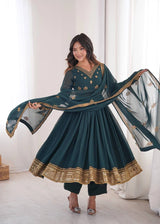
Zardozi vs Zari Work Saree: What is the Difference?
You've heard both terms: zari and zardozi. Both involve metallic threads on fabric. Both are associated with rich, embellished Indian textiles. But they're completely different in technique, origin, and application. If you've ever been confused about the two when shopping for a heavy bridal or festive saree, this guide will clear it up.
What is Zari?
The word 'zari' comes from the Persian word 'zar', meaning gold. Zari is a metallic thread used in weaving, not embroidery. It's incorporated into fabric during the weaving process on a loom, creating patterns as part of the fabric structure itself. Traditional pure zari is made from fine silver wire coated with gold. Contemporary zari uses gold-coated copper wire or metallic polyester.
Zari is woven into fabric to create borders on Kanjivaram, Banarasi, Paithani, and other silk sarees, brocade pallu designs, and small butis (motifs) scattered across the body. Explore our zari sarees and zari weaving sarees collections.
What is Zardozi?
Zardozi also comes from Persian: 'zar' (gold) and 'dozi' (embroidery). It literally means gold embroidery. Unlike zari, zardozi is an embroidery technique applied to fabric after weaving. Artisans use hooks (called aari) to couch heavy metallic threads, creating raised, textured designs on the fabric surface. The result is three-dimensional, noticeably textured, and catches light from multiple angles.
Zardozi vs Zari Work Saree Comparison: Key Differences

-
Technique: Zari is woven into fabric during production. Zardozi is embroidered onto fabric after weaving.
-
Feel: Zari is flat and smooth, part of the fabric surface. Zardozi is raised and textured, sitting above the base fabric.
-
Tools: Zari requires a loom. Zardozi requires a needle and an aari hook, done by hand.
-
Weight: Zardozi adds significant weight to a saree. Woven zari adds comparatively less.
-
Where found: Zari in woven silks (Banarasi, Kanjivaram, Paithani). Zardozi on embroidered sarees and bridal lehengas.
History of Zari in Indian Textiles
Zari weaving has been part of Indian textile history for at least 2,000 years. The Mughal period intensified zari use, with Varanasi (Banaras) becoming the undisputed center of zari-brocade weaving. The Banarasi brocade received a GI tag in 2009. Similarly, Kanjivaram zari borders and Paithani borders represent distinct regional zari-weaving traditions. Our zari weaving border sarees showcase this glorious tradition.
History of Zardozi Embroidery
Zardozi was brought to India by Mughal emperors in the 16th century. Emperor Akbar established royal embroidery workshops (karkhanas) in Agra, Lahore, and Ahmedabad. The most famous center of Zardozi in India today is Lucknow in Uttar Pradesh, followed by Bhopal, Delhi, and Agra.
Types of Zari on Sarees
-
Pure zari (Kalabattu/Real zari): Silver core with gold coating. Used in the finest Banarasi and Kanjivaram sarees.
-
Imitation zari (Kasab/Badla): Gold-coated copper wire. Cheaper, slightly shinier, less durable.
-
Metallic polyester zari: Fully synthetic. Used in budget sarees. Not as rich-looking.
Types of Zardozi on Sarees
-
Traditional Zardozi: Heavy goldwork with bullion wire, metal chips, and sequins. Very labor-intensive.
-
Aari (Tambour) Zardozi: Uses a hooked needle to create chain stitch designs with metallic thread.
-
Dabka work: Uses coiled metallic wire stitched down in patterns. Creates a spongy, raised surface.
-
Salma-sitara: Combines metallic thread (salma) with sequins (sitara) for an all-over glittering effect.
Caring for Zari and Zardozi Sarees
-
Dry clean zardozi sarees. Water can loosen adhesives used for some embellishments.
-
Never wring. Wringing damages both zari threads and zardozi elements.
-
Store flat or rolled, not folded. Repeated folding weakens zari threads at fold lines.
-
Anti-tarnish paper near stored sarees prevents zari from turning black.
Our zari woven sarees deserve this level of care to last for decades.
Frequently Asked Questions
Is zari embroidery the same as zardozi?
No. Zari is a metallic thread woven into fabric. Zardozi is an embroidery technique using metallic threads applied to fabric after weaving. They're related in material but completely different in technique.
How do I know if a saree has pure zari?
Pure zari (silver-core, gold-coated) leaves a slight gold residue on your fingers when rubbed, looks warm and deep under light, and has a noticeable weight. Metallic polyester zari has a harsh, uniform shine and leaves no residue.
Does zardozi work make a saree heavy?
Yes. Heavy Zardozi embroidery adds significant weight, which is why Zardozi sarees are mostly worn for weddings and formal events. Lighter Aari Zardozi adds less weight and is more suitable for extended wear.
Can zardozi sarees be washed at home?
No. Zardozi sarees should always be dry cleaned. Water and detergent can loosen metallic threads and dissolve adhesives used for some embellishments.