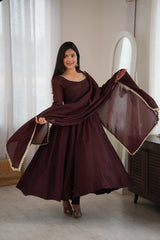
Saree Color Guide for Karva Chauth: What to Wear and Why?
Every year, as Karva Chauth approaches, one question comes up in almost every household: What color saree should I wear? The answer isn't random. Color choices for this fast carry deep cultural meaning, astrological significance, and family tradition. This guide covers what colors are worn, why they matter, and what to pair them with for the best look.
What is Karva Chauth?
For those new to the tradition: Karva Chauth is a one-day Hindu festival observed mainly in North India (Punjab, Haryana, UP, Rajasthan, Delhi) and by the Indian diaspora in the US and UK. Married women fast from sunrise to moonrise, praying for the long life of their husbands. The fast is broken after sighting the moon through a sieve.
The occasion involves getting dressed in festive finery, wearing sindoor, applying mehndi, and celebrating with family. The saree chosen for Karva Chauth is worn through the moonrise ceremony, so it must be both beautiful and comfortable.
Traditional Karva Chauth Saree Colors

Red: The Most Traditional Choice
If there's one color that rules Karva Chauth across North India, it's red. Red is the color of Shakti, marriage, and auspiciousness in Hindu tradition. Deep crimson, ruby red, and wine red are all welcome. Even brick red and dark coral fall within this beloved category.
Pair with gold jewelry, red bangles, and a matching red bindi. A red Banarasi, red Kanjivaram, or red embroidered georgette saree is the quintessential look. Browse our Karva Chauth sarees for beautiful red options.
Pink: The Modern Classic
Over the last decade, pink in all its shades has become the second most popular Karva Chauth saree color. Deep magenta, hot pink, soft rose, and blush are all widely worn. Many women who wore red at their wedding choose deep pink for Karva Chauth to look equally festive in something different.
Orange: Vibrant and Auspicious
Bright orange and saffron represent sacrifice and devotion in Hindu culture. A deep orange or saffron saree is especially popular in Rajasthan and Gujarat for this occasion. Pair with gold jewelry and green glass bangles. Our orange sarees have vibrant festive options.
Yellow: Turmeric and New Beginnings
Bright yellow (haldi) represents prosperity and the sun's energy. Mustard yellow and deep golden yellow look especially rich with gold embroidery. See our yellow sarees for women for festive options.
Green: Fertility and Marital Harmony
In some communities, green is worn on Karva Chauth as the color represents fertility and growth. Bright green, peacock green, and parrot green are all seen, especially in Rajasthani families.
Colors to Avoid on Karva Chauth
-
White: Associated with mourning in Hindu tradition. Not appropriate for a celebratory fast day.
-
Black: Considered inauspicious in many North Indian traditions for religious festivals.
-
Grey and dark navy: Traditionally avoided by orthodox families, though modern urban women often wear them without concern.
Best Saree Fabrics for Karva Chauth
Karva Chauth falls in October or November. North Indian weather is pleasant at this time, giving you good fabric flexibility.
-
Georgette: Most popular. Lightweight, flows beautifully, takes embroidery well. A red or pink embroidered georgette is a perennial favorite.
-
Silk: Pure silk or silk blends give the richest look. A Banarasi silk in red or pink is traditional.
-
Chiffon: Very lightweight. Great for women who may feel tired from fasting.
-
Net with inner lining: Glamorous for the evening moonrise ceremony.
Browse our festive sarees for women for the full range of Karva Chauth-appropriate fabrics and colors.
Karva Chauth Saree Looks by Region
Punjab Style
Punjabi women favor heavily embellished sarees in bright jewel tones. Phulkari embroidery on pink or red fabric is iconic. Pair with heavy kundan or polki jewelry and traditional red and gold glass bangles.
Rajasthani Style
Rajasthani Karva Chauth looks favor bright bandhani sarees in red, orange, and pink. Gold ribbon (gota patti) embroidery adds the festive gleam. Our rajasthani sarees capture this spirit.
UP and Delhi Style
In UP and Delhi, Banarasi silk sarees in red and pink are the ideal choice. The heavy brocade work photographs beautifully. Pair with real gold or temple gold jewelry.
Indian-American Style
Indian women in the US celebrating Karva Chauth often choose embellished georgette or designer sarees in traditional colors, combining Indian tradition with a slightly more party-ready style. The moonrise gathering in diaspora communities has become a social event.
What to Pair with Your Karva Chauth Saree
-
Jewelry: Gold choker or layered necklace, earrings, and bangles. Maang tikka and nose ring complete the bridal look.
-
Bangles: Red and gold glass bangles from wrist to elbow. Traditional and non-negotiable.
-
Blouse: Matching or contrasting with embellishment. For red sarees, a gold or dark pink blouse creates visual contrast. Check our Karva Chauth blouse options.
Practical Saree Tips for a Long Fast Day
-
Choose a well-fitted petticoat. A loose one means re-draping by afternoon.
-
Use 2-3 pins or fashion tape for the pallu. You'll be performing aarti and moving around.
-
Comfortable footwear. You'll be standing for the ceremonies.
-
Wear lighter fabrics if you're fasting. Heavy silk on an empty stomach is exhausting.
Frequently Asked Questions
What is the most popular Karva Chauth saree color?
Red is the single most traditional and popular Karva Chauth saree color across North India. Deep magenta and rani pink are the popular modern alternatives.
Can I wear a lehenga instead of a saree for Karva Chauth?
Yes, many women do. A red or pink bridal lehenga is equally traditional and very popular among younger generations.
What fabric is best given the long fast?
Lightweight georgette or chiffon is most comfortable. These don't add weight to the body and are easy to manage through a long day.
Can unmarried women observe Karva Chauth?
Traditionally, Karva Chauth is observed by married women. Some engaged women observe it too. Customs vary widely by family and region.