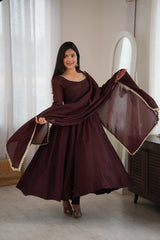
How to Identify Original Banarasi Saree? 10 Authentic Signs
Buying a Banarasi saree is an investment. And let's be real, nobody wants to spend thousands on a fake.
The market's flooded with power loom copies claiming to be authentic Banarasi silk. They look similar at first glance, but they're worlds apart in quality, craftsmanship, and value.
Here's how to identify original Banarasi saree so you never get fooled again.
What Makes a Banarasi Saree "Original"?
An authentic Banarasi saree is hand-woven in Varanasi (Banaras), Uttar Pradesh using traditional techniques that date back centuries. Real handloom weavers spend weeks or months creating intricate designs with pure silk and genuine zari (metallic thread).
Anything else? It's an imitation, plain and simple.
The difference isn't just about authenticity. It's about supporting artisan communities, preserving cultural heritage, and owning something that'll last generations instead of a few years.
Top 10 Signs to Identify Original Banarasi Saree

Sign 1: Check the Weave Density and Quality
Flip your saree over. Look closely at the weave.
Original Banarasi sarees have incredibly tight, dense weaving. You'll struggle to see through the fabric even when you hold it up to light (except for the sheerest varieties).
The weave is uniform but not robotic. There's a rhythm to it, evidence of human hands guiding each thread.
Fake Banarasi sarees have looser weaves. The threads don't sit as tightly together. You can often see gaps when held against light.
Run your fingers across the surface. Real Banarasi silk feels substantial. There's weight and body to it. Fakes feel flimsy and insubstantial.
Sign 2: Examine the Zari Work Closely
This is where most fakes get caught.
Real zari is made from silk threads wrapped in actual silver or gold. When you bend the fabric, genuine zari doesn't crack or break. It flexes naturally with the silk.
Fake zari (called imitation zari) uses metallic-coated plastic threads. Bend the fabric sharply. If the gold/silver coating cracks or flakes off, revealing a different color underneath, it's fake.
Here's another test: Burn a tiny zari thread from the blouse piece (don't burn the saree itself!). Real zari leaves behind ash and smells like burnt metal. Fake zari melts into plastic-like beads and smells like burning plastic.
The zari sarees collection at Kalyanja clearly mentions whether pieces use pure or imitation zari, so you know exactly what you're getting.
Sign 3: Look for the Three Selvages
This is a dead giveaway.
Original Banarasi handloom sarees have three selvages (finished edges):
-
Both long sides
-
One end (usually the pallu end)
The third selvage takes extra time and skill to create. Power looms skip this step to save time.
Check the edges carefully. Are they woven as part of the fabric, or do they look stitched on later? Authentic pieces have integrated edges that can't be separated without unraveling the entire saree.
Sign 4: Inspect the Motifs and Patterns
Banarasi motifs have deep cultural significance. Common designs include:
-
Jangla (forest-inspired floral patterns)
-
Shikargah (hunting scenes with animals)
-
Kalga and bel (paisley and creeping vine)
-
Jhumka (bell-shaped patterns)
-
Minakari (enamel-work inspired designs)
In how to check original Banarasi saree, motif clarity matters. Original pieces have sharp, well-defined patterns. The borders and pallu designs are intricate and proportionate.
Fake sarees often have blurry or simplified versions of traditional motifs. The patterns look rushed or incomplete.
Hold the saree at arm's length. Can you clearly see the design story? Or does it look muddy and unclear?
Sign 5: Feel the Texture and Weight
Close your eyes. Run your hands across the fabric.
Original Banarasi silk has a unique texture:
-
Slightly rough to touch (silk's natural state)
-
Substantial weight (not heavy, but present)
-
Cool against skin initially, then warms up
-
Smooth but with character
Fake versions feel either too smooth (synthetic fibers) or scratchy (cheap materials mixed in). They're often lighter than they should be.
A genuine Banarasi saree in your hands feels like it matters. There's heft. Presence. Quality you can literally feel.
Sign 6: Check the Color Fastness

This test requires patience but it's worth it.
Dampen a small, hidden section (like the inner pallu corner) with water. Press a white cloth against it.
Original Banarasi sarees use quality dyes that don't bleed. Your white cloth should stay white.
Cheap imitations often use inferior dyes that transfer color. If your cloth picks up color, think twice about that purchase.
This is especially important for dark colors like maroon sarees or wine sarees where dye quality really shows.
Sign 7: Look for the Handloom Mark or GI Tag
The Government of India issues the Handloom Mark, a special label certifying genuine handloom products.
Additionally, Banarasi sarees have GI (Geographical Indication) tag protection. This legal certification confirms the saree was actually made in Varanasi using traditional methods.
Not all authentic sarees will have these labels (especially older pieces or those from individual weavers). But if present, they're reliable indicators of authenticity.
Ask the seller about certification. Genuine dealers proudly display these marks.
Sign 8: Examine the Back of the Saree
Here's a pro tip most people miss: flip the saree inside out.
Original Banarasi sarees show the weaving process clearly on the reverse. You'll see:
-
Loose thread ends where motifs start and stop
-
The actual construction of patterns
-
How zari threads are woven in (not glued or stitched)
The back looks "messy" in an organized way. You can literally trace how the weaver created each design.
Power loom fakes have neat, clean backs. Too neat. The reverse side looks almost as finished as the front because machines create uniform output.
If the back looks suspiciously perfect, it probably is.
Sign 9: Check the Price Point
Let's talk money. Real Banarasi sarees aren't cheap.
A genuine, handwoven Banarasi with pure silk and real zari starts around Rs. 8,000 to Rs. 10,000 for simpler designs. Intricate pieces easily go up to Rs. 50,000 or more.
Why? Because:
-
Pure silk costs money
-
Real zari is expensive
-
Handweaving takes weeks or months
-
Skilled artisans deserve fair wages
If someone's selling you a "pure Banarasi" for Rs. 2,000, your alarm bells should be ringing. That price barely covers material costs, let alone labor.
Where to buy original Banarasi saree? Look for sellers who are transparent about pricing and explain what goes into the cost.
Sign 10: Verify the Silk Quality
The silk itself tells the truth.
Pure silk has distinct characteristics:
-
Natural luster (not artificial shine)
-
Slight irregularities in thread thickness
-
Breathable (you won't feel suffocated wearing it)
-
Warm in winter, cool in summer
Do the ring test: Pull a small portion of fabric through a ring. Pure silk should slide through smoothly. Synthetic blends catch and bunch up.
Try the burn test (again, use a thread from the blouse piece): Pure silk burns slowly, smells like burning hair, and leaves behind easily crushable ash. Synthetics melt, smell like chemicals, and leave hard beads.
Silk sarees from verified sellers will specify the exact silk type, Mulberry, Tussar, or blends.
Additional Red Flags to Watch For
Beyond the 10 main signs, watch for these warning signals:
The seller can't answer basic questions:
-
Where was it woven?
-
How long did it take?
-
What type of silk is used?
-
Is the zari pure or imitation?
No return policy or guarantee: Authentic sellers stand behind their products.
Pressure tactics: "Buy now, limited stock, special price only today!" Real Banarasi dealers don't need to pressure you.
Stock photos only: If they can't show you actual product images, what are they hiding?
Suspiciously perfect condition: Handloom pieces have minor, natural imperfections. Absolute perfection suggests machine production.
Different Types of Original Banarasi Sarees

Not all Banarasi sarees are identical. Know the varieties:
Pure Silk (Katan) Banarasi
The classic. Woven entirely from silk threads. Most expensive and luxurious.
Soft Banarasi silk sarees use finer silk that drapes beautifully while maintaining traditional weaving.
Organza (Kora) Banarasi
Lighter, sheer silk. Perfect for summer weddings. The transparency allows intricate zari work to shine.
Georgette Banarasi
Modern adaptation using georgette base with traditional Banarasi weaving techniques. More affordable and easier to drape.
Tissue (Jangla) Banarasi
Shimmering, lightweight fabric with all-over zari work. Looks like woven gold.
Cutwork Banarasi
Features carefully cut patterns where fabric is removed to create lace-like effects. Extremely labor-intensive.
Each type has different identification markers, but the 10 signs we covered apply to all varieties.
Where Authentic Banarasi Sarees Come From
Geography matters. Real Banarasi sarees are woven in specific areas:
Varanasi city: The heart of Banarasi weaving Bhadohi: Known for silk carpets and sarees Azamgarh: Traditional weaving clusters Mirzapur: Handloom communities
If the seller claims "Banarasi" but can't specify the actual weaving location, dig deeper.
How to Buy Original Banarasi Sarees Online?
Shopping online for Banarasi sarees requires extra caution. Here's your strategy:
Check seller credentials:
-
How long they've been in business
-
Customer reviews (look for detailed ones, not just star ratings)
-
Return and refund policies
-
Contact information (real address, phone number)
Ask for videos: Request close-up videos showing:
-
The weave texture
-
Zari work flexibility
-
Back of the saree
-
Selvage edges
Verify product descriptions: Good sellers provide:
-
Exact dimensions
-
Silk type and percentage
-
Zari composition (pure or imitation)
-
Weaving technique used
-
Approximate weaving time
Start small: If trying a new seller, buy a less expensive piece first to verify quality.
Kalyanja's Banarasi collection provides detailed specifications for each saree, including fabric composition and weaving details.
Questions to Ask Before Buying
Don't be shy. Ask sellers these questions:
-
Is this hand-woven or power loom?
-
What percentage is pure silk?
-
Is the zari pure or imitation?
-
Where exactly was it woven?
-
Approximately how long did weaving take?
-
Do you have any certifications?
-
What's your return policy?
-
Can you provide close-up images/videos?
Their answers (or lack thereof) will tell you everything you need to know.
Caring for Your Original Banarasi Saree
Once you've invested in an authentic piece, protect that investment:
Storage:
-
Wrap in muslin cloth (never plastic)
-
Store flat, don't hang (prevents stress on weave)
-
Add neem leaves to prevent insects
-
Refold every 3 months to prevent permanent creases
Cleaning:
-
Dry clean only
-
Find a cleaner experienced with silk sarees
-
Never wash at home
-
Air out occasionally in shade (not direct sunlight)
Wearing:
-
Pin carefully to avoid snagging zari work
-
Avoid perfume directly on fabric
-
Be careful around jewelry (hooks can catch threads)
-
Remove immediately after events (don't sleep in it)
Properly cared for, an original Banarasi saree lasts generations. There are documented pieces over 100 years old still in wearable condition.
The Investment Value of Real Banarasi Sarees
Here's something most people don't realize: authentic Banarasi sarees appreciate in value.
Unlike fashion pieces that go out of style, traditional Banarasi work becomes more valuable with age. Vintage pieces from skilled weavers command premium prices.
You're not just buying a saree. You're buying:
-
Wearable art
-
Cultural heritage
-
Future heirloom
-
Smart investment
That cheap imitation might save you money today. But five years from now, it'll be in tatters while your original Banarasi still looks stunning.
Supporting the Weaver Community
Every original Banarasi purchase directly impacts weaver families in Varanasi.
These artisans face:
-
Competition from cheap power loom copies
-
Rising material costs
-
Younger generations leaving the craft
-
Exploitation by middlemen
When you buy authentic and pay fair prices, you're voting with your wallet. You're saying this craft matters. These skills deserve to survive.
Traditional sarees and cultural sarees collections help preserve these dying art forms.
Common Myths About Banarasi Sarees
Let's bust some misconceptions:
Myth 1: "All Banarasi sarees are extremely heavy." False. Organza and tissue Banarasi sarees are quite lightweight.
Myth 2: "You can't wear Banarasi for daily occasions." Wrong. Simpler Banarasi designs work perfectly for wedding reception sarees or festive sarees.
Myth 3: "Real Banarasi sarees only come in traditional colors." Nope. Modern weavers create contemporary color combinations while using traditional techniques.
Myth 4: "Machine-made looks just as good." Not even close. The depth, detail, and durability are incomparable.
Your Action Plan for Buying Authentic Banarasi
Here's your step-by-step strategy:
Step 1: Educate yourself (you're doing this right now, good job!)
Step 2: Set a realistic budget (remember, quality costs)
Step 3: Research sellers thoroughly
Step 4: Ask all the questions from our list
Step 5: Request detailed images or videos
Step 6: Check for the 10 authentication signs
Step 7: Start with one piece from a new seller
Step 8: Once satisfied, build your collection
Don't rush. A Banarasi saree is an investment that deserves careful consideration.
Conclusion
You now know how to identify original Banarasi saree using concrete, testable signs. But here's the thing, after checking all these markers, trust your gut.
If something feels off, it probably is. If the seller seems evasive, walk away. If the price seems too good to be true, it definitely is.
Original Banarasi sarees have a presence. You can feel the difference when you hold one. The weight, the texture, the way light plays on the zari, it all comes together into something special.
Start your authentic Banarasi collection today. Check verified sellers like Kalyanja who are transparent about their sourcing and support traditional weavers.
Your wedding, your special occasions, your heirloom collection, they all deserve the real thing.